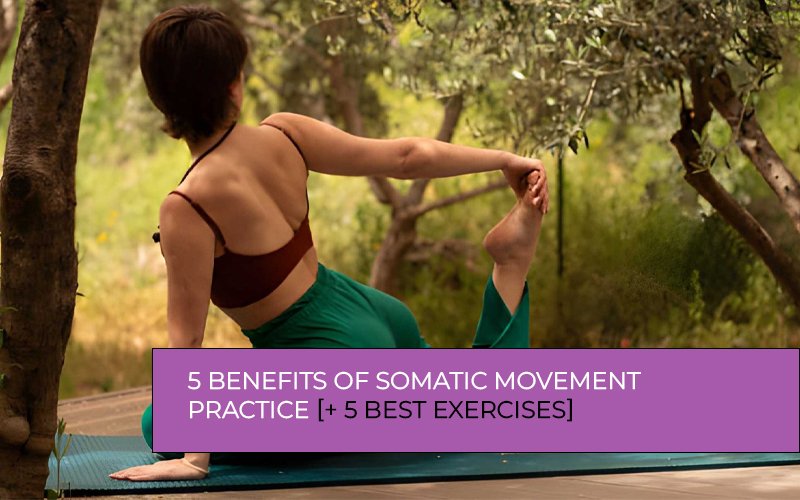
Somatic Movement Practice [+ 5 Best Exercises to Try]

We hope you enjoyed reading and learning more about the body and mind. If you would like to connect with our experts, click here
Author: Glenn Hall | Co-Founder of SomaFlow™ Institute
Somatic movement practice uses slow movements to build body awareness and improve your everyday movement. It helps you notice tension, breathing, balance, posture, and movement habits that usually happen automatically.
Many people only notice their bodies when discomfort appears after hours of sitting, working, exercising, or repeating the same movements.
You might notice tight shoulders after answering emails or a stiff neck after working at your desk.
These signs can show that your body has been responding to your daily habits for some time. Somatic movement gives you a chance to notice these signals earlier through simple and mindful movement.
At SomaFlow™ Institute, we help people develop this awareness through gentle somatic movement and guided learning.
Our Embodied Core Awareness Course helps you explore breathing, balance, weight shifts, tension, and everyday movement patterns.
What Is Somatic Movement Practice?
Somatic movement practice uses slow, gentle movements with focused attention. You notice how your body feels as you move, rather than focusing only on movement performance.
You might slowly roll your shoulders, shift your weight, or turn your head. During each movement, you notice changes in tension, balance, breathing, and comfort. You can then explore the movement again with less effort.
Imagine sitting at your computer for three hours. Your head may move forward while your shoulders round toward the screen. You might not notice these changes because your body has repeated them many times.
A somatic movement practice gives you time to notice this pattern.
You can pause, breathe comfortably, and explore a different position. You do not need to force your body into a new posture.
Established approaches use similar principles.
The Feldenkrais Method uses conscious movement to encourage learning through physical experience. Research describes its lessons as slow-movement activities with attention to bodily sensations.

A Different Way of Working With the Body
SomaFlow offers an approach centered on embodied practice and facilitation that many practitioners find more sustainable over time, prioritizing awareness, adaptability, and working with the body rather than against it.
Why Is Somatic Movement Practice Important?
Your body provides information throughout the day. You may notice tiredness, tension, changes in balance, or differences between the two sides.
However, busy routines can make these signals easy to miss.
Somatic movement creates time for observation. You can notice what your body does before you automatically react.
This can help you understand repeated movement patterns more clearly.
For example, someone might always carry a heavy bag on one shoulder. Another person might lean on one leg while standing. A third person might clench their jaw during stressful work.
These habits do not automatically indicate a health problem. They simply provide information about how someone moves.
Somatic practice encourages people to notice that information without immediately judging it.
5 Benefits of Somatic Movement Practice
Somatic movement can support body awareness and movement learning. However, research does not support every health claim you may see online.
1. It Builds Body Awareness
Body awareness means noticing what happens inside your body. You can notice your breathing, muscle tension, balance, movement, and physical sensations.
For example, think about working toward an important deadline. You might notice your breathing becoming shallow as you concentrate. You may also tighten your shoulders without realizing it.
A short awareness practice can help you notice those changes.
You can pause and observe your breathing before continuing your task. This simple habit can make your physical experience easier to understand.
2. It Helps You Notice Movement Habits
Everyone develops repeated ways of moving. These habits often develop through work, sports, daily tasks, or personal routines.
You might always turn toward the same side when reaching. You might also use one leg more when climbing stairs. Somatic practice helps you notice these patterns without immediately trying to correct them.
For example, stand comfortably and shift your weight between both feet. Notice whether one side feels easier or more stable. This simple exercise can reveal differences you normally overlook.
3. It May Support Balance
Balance depends on several systems working together. Your brain receives information from your eyes, muscles, joints, and inner ear.
Slow weight-shifting exercises can help you pay attention to changes in balance. You can notice how your feet respond as your weight moves from side to side.
4. It Encourages Mindful Movement
Many people focus on completing an exercise as quickly as possible. Somatic movement shifts attention toward the movement itself.
Imagine standing up from a chair. You can rush through the movement without noticing anything. You can also slow down and notice your feet, knees, hips, and breathing.
This approach turns an ordinary movement into an awareness exercise. You learn more about how your body organizes the movement.
5. It Can Make Movement Feel More Familiar
People sometimes avoid movements because they feel awkward or unfamiliar with them. Slow exploration can give you time to understand those movements.
For example, you might slowly rotate your upper body while sitting.
You can notice which direction feels easier. You can also notice where you feel more resistance.
This does not mean you should force the harder side. Instead, you can explore both directions at a comfortable pace.
5 Simple Somatic Movement Practice Examples
You can practice somatic movement without expensive equipment. You only need enough space to move safely and comfortably.
Start with small movements and focus on how they feel. You do not need to complete difficult exercises or long sessions.
1- Shoulder Awareness Exercise
Sit comfortably with both feet on the floor. Let your arms rest naturally beside your body.
Slowly lift your shoulders toward your ears. Notice the movement as your shoulders rise. Then lower them slowly and notice what changes.
Repeat the movement several times without forcing it. You may notice that one shoulder moves differently. You may also notice tension that you normally ignore.
2- Gentle Weight-Shifting Exercise
Stand with your feet comfortably apart. Keep your knees relaxed and your breathing natural.
Slowly move your weight toward your right foot. Notice the pressure under your right foot. Then slowly shift your weight toward your left foot.
Compare both sides without judging them. This exercise can help you notice how your body manages weight and balance.
3- Slow Walking Exercise
Walk slowly across a comfortable room. Pay attention to how each foot touches the floor.
Notice how your weight moves from one foot to another. Also notice how your arms and shoulders move while you walk.
Do not try to change your walking pattern immediately. First, observe how you naturally move.
4- Seated Pelvic Movement
Sit comfortably with both feet supported. Keep your upper body relaxed.
Slowly move your pelvis forward and backward. Keep the movement small and comfortable.
Notice how your lower back responds to each movement. Stop if you experience pain or unusual discomfort.
5- Breathing Awareness
Sit quietly and notice your natural breathing pattern. Do not force your breathing to become deeper.
Notice whether your chest, ribs, or abdomen move as you breathe. You can also notice whether your breathing changes during movement.
This practice keeps your attention on physical sensations. It does not require special breathing techniques.
How Can You Start a Somatic Movement Practice?
You can start with five minutes each day. You do not need to create a complicated routine.
Choose a quiet space where you can move comfortably. Then choose one simple movement that feels easy.
Start slowly and pay attention to your physical experience. Notice your breathing, balance, muscle tension, and weight distribution.
Try not to judge what you notice. Your body may feel different from one day to another. Your goal involves learning rather than achieving perfect movement.
You can also add short awareness breaks during your workday. For example, pause before standing from your desk. Notice your feet, breathing, shoulders, and posture before moving.
A Simple Five-Minute Somatic Movement Routine
A short routine can help beginners create a regular practice. You can complete this routine at home or during a quiet work break.
- Minute one: Sit or stand comfortably and notice your body. Pay attention to your feet, breathing, shoulders, and overall tension.
- Minute two: Slowly lift and lower your shoulders. Notice how each shoulder moves and feels.
- Minute three: Stand and slowly shift your weight between both feet. Notice the pressure changes under your feet.
- Minute four: Walk slowly around the room. Notice each step and your natural breathing pattern.
- Minute five: Stop moving and notice how your body feels. Compare these sensations with your starting point.
This routine does not require perfect technique. The main goal is to pay attention to your physical experience.
Somatic Movement Practice During Everyday Activities
You can use somatic awareness outside dedicated practice sessions. Everyday activities provide many opportunities to notice your body.
Working
Notice your shoulders while typing or reading. Check whether you hold your breath during difficult tasks.
You can also notice how your feet contact the floor. Small pauses can help you recognize tension before you continue working.
Walking
Notice how your feet meet the ground. Pay attention to how your weight shifts between both sides.
You can also notice your arms and shoulders. Try observing your walking pattern before changing anything.
Cooking
Notice how you stand while preparing food. You may discover that you lean toward one side.
You may also notice tension while reaching or lifting objects. Awareness can help you understand these repeated movements.
Doing Household Tasks
Laundry, cleaning, and shopping all involve repeated movements. You can notice how you bend, reach, twist, and carry objects.
For example, you might always carry grocery bags with one hand. You can notice this habit and consciously change sides when comfortable.
4 Common Mistakes During Somatic Movement Practice
Beginners sometimes treat somatic movement like a normal workout. They try to move farther, stretch harder, or complete more repetitions.
That approach can distract you from the main purpose. Somatic practice focuses on awareness during movement.
1- Trying to Move Perfectly
You do not need perfect movement during somatic practice. Your body may move differently from someone else’s body.
Focus on what you feel rather than copying another person’s exact movement. Your observations matter more than perfect performance.
2- Moving Too Quickly
Fast movements give you less time to notice subtle changes. Slow your movements and give yourself enough time to observe.
You can repeat simple movements several times. Small movements often provide enough information.
3- Forcing Your Body
Never force your body into painful positions. Stay within a comfortable range and stop when something feels wrong.
Somatic movement should encourage exploration. It should not become a competition with your own body.
4- Expecting Instant Results
Body awareness develops through repeated attention. You may notice small changes first.
For example, your shoulders might become more noticeable during work, while stressful situations may make you more aware of your breathing.
Over time, these observations can become easier to recognize with regular practice.
The SomaFlow™ Approach to Somatic Movement
At SomaFlow™ Institute, we place awareness before forced physical change. Our SomaFlow™ approach focuses on gentle somatic movement and personal exploration.
We encourage people to notice their own movement patterns. You can explore breathing, balance, weight shifts, and muscle tension. The approach does not require you to copy one perfect movement.
The Embodied Core Awareness Course provides structured somatic movement learning. The course helps participants explore body awareness through guided movement experiences.
You can also learn more about somatic movement therapy and related practices.
Learning from a qualified professional can provide more structure for your practice.
Start Your Somatic Movement Practice Today!
Somatic movement practice can start with one simple movement. You do not need special equipment or a complicated routine.
Slow down and notice how your body moves. Pay attention to breathing, balance, tension, and physical sensations.
Use these observations to learn about your everyday movement habits. Do not judge your body or force immediate changes.
You can practice for five minutes each day. You can also add short awareness pauses during work, walking, cooking, or household tasks.
Remember that somatic movement complements regular physical activity. Follow general activity guidelines and choose activities that suit your abilities.
If you experience persistent pain or concerning symptoms, seek professional medical advice. A qualified professional at SomaFlow can help specify proper movement options.
The goal of somatic movement remains simple. Notice your body, explore movement, and learn from your physical experience.
Full-Body SomaFlow Course
An immersive introduction to embodied awareness, self-practice, and whole-body integration through the SomaFlow method.
People Also Ask
Is somatic movement suitable for beginners?
Yes, beginners can start with simple movements. You do not need previous movement experience.
Can I practice somatic movement at home?
Yes, you can practice many simple movements at home. You only need enough space to move safely.
Is somatic movement the same as stretching?
No, somatic movement focuses on awareness during movement. Stretching mainly focuses on lengthening muscles and improving flexibility.
Can somatic movement replace exercise?
No, somatic movement should not replace regular physical activity. Adults still need aerobic and muscle-strengthening activities.
Does research support somatic movement?
Research supports some specific somatic approaches. However, researchers still report limitations in the available evidence.
What should I focus on during somatic movement?
Focus on how your body feels during each movement. Notice breathing, balance, tension, pressure, and weight shifts.
Can I practice somatic movement while working?
Yes, you can add short awareness breaks during work. Notice your shoulders, breathing, feet, and sitting position.
Where can I learn somatic movement?
You can learn through guided classes and structured courses. SomaFlow™ Institute offers its Embodied Core Awareness Course for guided learning.
About the Author
Glenn Hall
Glenn Hall knows what it’s like to live with pain. Born with a serious back condition, he grew up dealing with stiffness, poor posture, and discomfort that never fully went away. Later in life, his challenges intensified: he suffered two complete biceps tears and two supraspinatus muscles retracted off the bone.