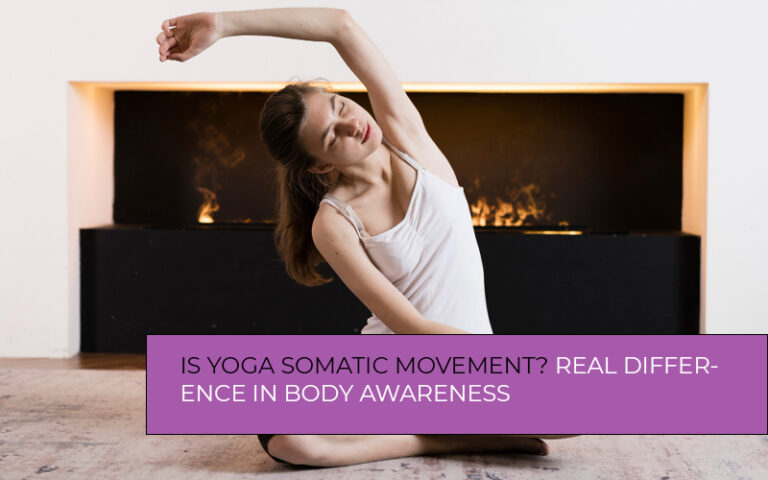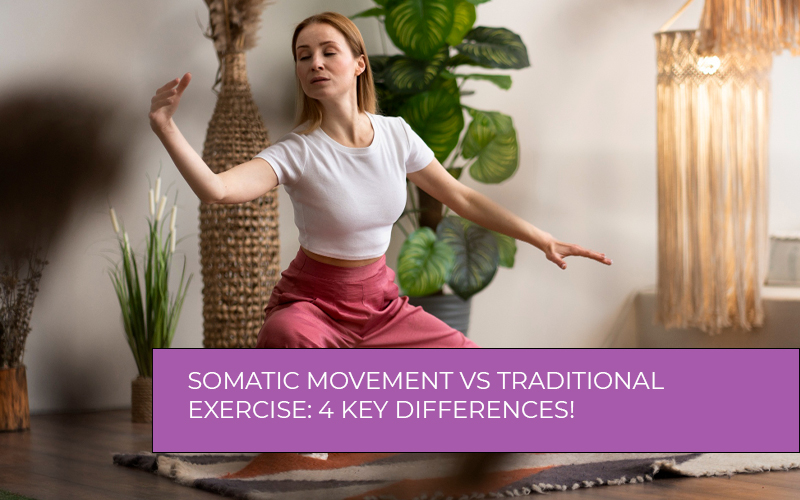
Somatic Movement Vs Traditional Exercise: 4 Key Differences!

We hope you enjoyed reading and learning more about the body and mind. If you would like to connect with our experts, click here
Author: Glenn Hall | Co-Founder of SomaFlow™ Institute
Somatic movement is feeling and understanding your body from the inside. Traditional exercise improves fitness, strength, and performance.
Many people think all movement practices are the same. Activities like strength training, cardio workouts, and fitness classes focus on building strength, endurance, and physical performance. Weight lifted, calories burned, or speed are important in traditional exercise.
Somatic movement is different.
It focuses on body awareness, movement perception, and how your body feels as you move.
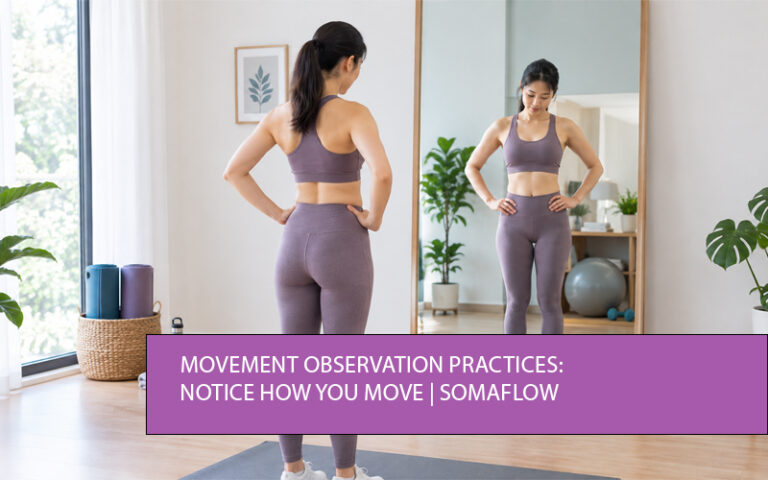
It is an embodied practice where you pay attention to internal sensations, not just what your body looks like from the outside.
At SomaFlow™ Institute, we teach massage therapists and professionals how to understand the body deeply through hands-on methods that improve movement, reduce tension, and support healing.
What Is Somatic Movement?
Somatic movement is a way of moving that focuses on how your body feels inside, not just how it looks from the outside.
The word “somatic” means your internal body experience. It includes body awareness, movement perception and noticing small sensations while you move.
You don’t follow fixed exercises or repeat the same routine. Somatic movement helps you explore how your body moves using attention in movement, internal awareness and movement coordination.
Research shows that somatic movement can improve body awareness and movement in real people.
In one pilot study, a 10‑week somatic movement program helped older adults increase spinal mobility and internal sensing during movement.
There is no pressure to be perfect. The goal is to understand your own movement patterns.
In somatic practice, you learn to:
- Notice internal sensations in your body
- Observe patterns of tension and effort
- Move slowly with attention and control
- Improve body awareness and movement efficiency
This type of embodied learning helps you understand how your body responds in real time.
You may start to notice habits like tightness, imbalance or unnecessary effort that you did not feel before.
Over time, somatic movement improves myofascial release and awareness and helps your body move naturally.
It is called an embodied practice because it connects your mind, body, and movement into one experience.
A Different Way of Working With the Body
SomaFlow offers an approach centered on embodied practice and facilitation that many practitioners find more sustainable over time, prioritizing awareness, adaptability, and working with the body rather than against it.
What Is Traditional Exercise?
Traditional exercise is a type of movement that focuses on fitness, strength, and physical performance.
It is based on clear goals and results. These results can be measured, which makes it different from somatic movement that focuses on internal awareness.
Common goals of traditional exercise include:
- Increasing strength
- Improving cardiovascular fitness
- Building endurance
- Improving athletic performance
Most exercise programs follow a set routine. This can include activities like weight training, running, cycling, or high-intensity workouts. These movements are repeated to improve performance over time.
In traditional exercise, progress is tracked using external results such as the number of repetitions, amount of weight lifted, speed, stamina, or distance.
There is also a strong focus on proper form and technique. Movements are done in a specific way to stay safe and get the best results.
4 Key Differences Between Somatic Movement and Exercise
1- Focus of Attention
In traditional exercise, your attention is on doing the movement correctly or reaching a goal. You may think about your form, speed, or how many reps you complete. This is an external focus.
In somatic movement, attention goes inward. You focus on body awareness, internal sensations, and how the movement feels.
Instead of thinking “Am I doing this right?”, you notice “What do I feel in my body?” This improves movement perception and movement coordination.
2- Pace and Structure
Traditional exercise follows a clear structure. You repeat movements in sets with a steady rhythm. This helps build strength and endurance.
Somatic practices are slower and more flexible. The slow pace gives you time to notice small details in your movement. Instead of repeating for intensity, you explore different ways of moving.
This helps attention in movement and better movement efficiency.
3- Purpose of Movement
The main goal of traditional exercise is fitness and performance. It focuses on results like strength, stamina, and overall conditioning.
Somatic movement has a different purpose. It focuses on awareness, embodied learning, and understanding how your body moves. The goal is not performance, but deeper connection with your body.
4- Learning Process
In traditional exercise, learning happens through instruction and repetition. You follow guidance and practice until you improve.
In somatic movement, learning comes from your own experience. You observe how your body responds and adjust based on what you feel.
This builds internal awareness, myofascial awareness and helps you understand your personal movement patterns.
Somatic Practice and Long-Term Movement Sustainability
Many people do exercise for years, but sometimes they push their bodies too hard. This can create tension, pain, or poor movement patterns over time.
In somatic movement, you learn to work with your body, not against it. You use attention in movement and body awareness to guide how you move.
With regular embodied practice, you also build myofascial awareness, which helps reduce strain in the body.
Over time, this creates a more balanced and sustainable way to move, so your body feels better and works better in daily life.
Who Is Somatic Movement For?
Somatic movement is for anyone who wants to understand their body better through body awareness and movement perception.
It is not only for fitness or performance. It is for people who are curious about how their body feels, moves, and responds from the inside.
This makes it a powerful embodied practice for learning and self-awareness.
People who often explore somatic movement include:
- Movement professionals
- Bodyworkers
- Yoga instructors
- People interested in embodied learning
These people use somatic methods to improve movement coordination, understand movement patterns, and guide others more effectively.
But somatic movement is not just for professionals.
Anyone can practice it. If you want to improve internal awareness, move with less tension, and build better connections with your body, somatic movement can help.
Exploring Somatic Movement Through Structured Practice
Somatic movement can be easier to learn when you practice in a guided setting.
Structured programs give you support while still allowing you to explore your own body. You are not just told what to do. You learn by feeling, noticing, and understanding your own movement.
These programs may include:
- Guided movement exploration
- Observation-based learning
- Touch and myofascial awareness practices
- Group learning experiences
In these sessions, you build body awareness, improve movement coordination, and develop strong internal awareness. You also learn how attention in movement can change the way your body feels and moves.
If you want to go deeper, you can join somatic movement workshops, embodied practice learning or somatic awareness courses.
These help you understand your body practically and simply.
Conclusion
Somatic movement and the traditional exercise approach move from different perspectives.
Exercise focuses on performance, conditioning and measurable results.
Somatic practices explore the internal experience of movement through awareness and perception.
At SomaFlow™ Institute, you learn how to understand the body, release tension, and improve how people move and feel.
Our training gives you real hands-on experience, movement awareness and movement efficiency, skills to help yourself and others and professional knowledge you can use in your career.
If you are a therapist, fitness professional, or someone who wants to learn embodied practice, review SomaFlow courses and workshops to excel in your career.
About the Author

Glenn Hall
Glenn Hall knows what it’s like to live with pain. Born with a serious back condition, he grew up dealing with stiffness, poor posture, and discomfort that never fully went away. Later in life, his challenges intensified: he suffered two complete biceps tears and two supraspinatus muscles retracted off the bone.