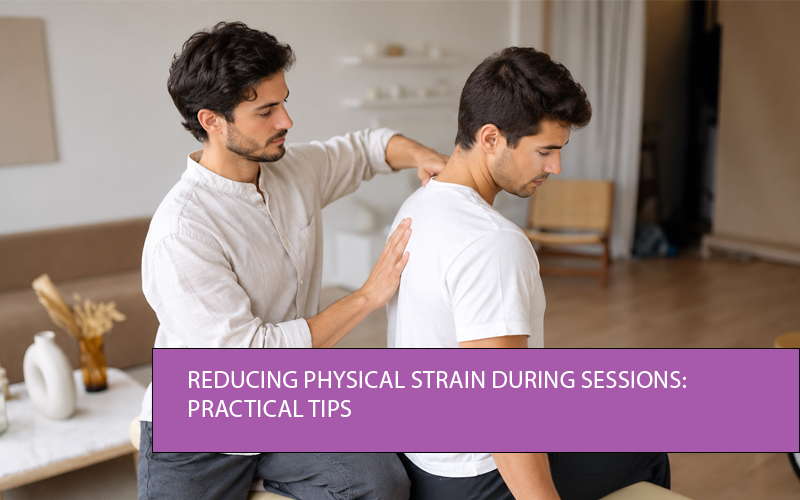
8 Tips to Reduce Physical Strain During Sessions

We hope you enjoyed reading and learning more about the body and mind. If you would like to connect with our experts, click here
Author: Shoshi Hall | Co-Founder of SomaFlow™ Institute
Working with clients through touch, movement, breathing, and attention can be tiring for your body. Staying in one position too long, reaching across a client, leaning forward, or doing the same movement again and again can cause tension.
You may feel this tension in your shoulders, neck, wrists, back, or legs during or after a session. It can make you feel tired and make it harder to stay focused on your client.
At SomaFlow™ Institute, you can learn to pay more attention to how you move, breathe, touch, and use your body during sessions.
Explore our courses and workshops and apply to deepen your skills and bring greater body awareness into your sessions.
What Causes Physical Strain During Sessions?
Physical strain can happen when you stay in the same position for too long or use the same part of your body again and again.
For example, you may lean over a client while working with your hands. You may raise your shoulders when you focus. You may put most of your weight on one leg. You may also reach too far instead of moving your whole body closer.
These habits may not bother you at first. After several sessions, though, they can leave you feeling tired or tense.
Your workspace can also affect how you move. The height of the table, the position of your chair, the space around you, and how close you stand to your client can all affect your body.
Paying attention to these things can help you find easier and more comfortable ways to work.
A Different Way of Working With the Body
SomaFlow offers an approach centered on embodied practice and facilitation that many practitioners find more sustainable over time, prioritizing awareness, adaptability, and working with the body rather than against it.
How Can You Reduce Physical Strain During Sessions?
You can reduce physical strain by making small changes to your position, movement, and use of effort.
We don’t say you should create one perfect posture to maintain throughout every session. Instead, you can develop the ability to notice when your body starts working harder than necessary and adjust your position.
NIOSH says that awkward positions, repeated movements, and staying in one position for too long can cause muscle tiredness and body pain at work.
These are several practical ways to begin.
1. Bring Your Body Closer to the Work
Reaching often creates unnecessary effort.
If you work with your arms extended for a long period, you may place more demand on your shoulders, upper back, and neck. Instead of reaching farther, consider moving your whole body closer to the area where you work.
For example, if you stand beside a client and need to reach across them, take a step closer or change your position.
Let your legs and feet help you reach the appropriate distance instead of asking your arms to do all the work.
2. Let Your Shoulders Relax
Practitioners often lift or tighten their shoulders when they concentrate.
You can check your shoulders during a session. Notice whether they have moved toward your ears or whether you hold tension around your neck.
You do not need to force your shoulders downward. Instead, release unnecessary effort and allow your arms to move with greater ease.
Take a moment between movements to notice how your shoulders feel. If you notice tension, change your position, move your arms, or take a comfortable breath before continuing.
3. Use Your Whole Body
Your hands do not need to do all the work.
When you move, reach, or apply pressure, allow your legs, pelvis, spine, and arms to participate.
You can shift your weight, bend your knees slightly, or move your feet instead of keeping your body fixed while your arms reach forward.
For example, when you move from one side of a client to another, walk around rather than twisting your torso repeatedly.
Whole-body movement can help you distribute effort rather than concentrating it in one area.
4. Change Positions Regularly
Even a comfortable position can create strain when you hold it for too long.
During a session, look for natural opportunities to change your position. Simple movement observation practices can also help you become more aware of these habits.
You can move from sitting to standing, adjust your feet, change your distance from the client, or shift your weight from one side to the other.
You do not need to make these changes dramatic. Small movements can help you avoid staying in the same position for an extended period.
Think of movement as part of the session rather than something you only do when discomfort appears.
5. Pay Attention to Your Feet
Your feet provide important information about how you organize your body.
Notice where your weight rests when you stand. Do you place most of your weight on one foot? Do you lock your knees? Or do you shift your weight when you reach?
Try standing with a comfortable amount of space between your feet. Notice how your weight moves when you reach forward, turn, or change direction.
When you stay aware of your feet, you may find it easier to notice when another part of your body starts compensating for your position.
6. Adjust Your Working Height
The height of your working surface can influence how you position your body.
If you work at a surface that sits too low, you may bend forward repeatedly. If it sits too high, you may raise your shoulders or adjust your arms awkwardly.
When possible, choose a working height that allows you to keep your body comfortable while you work. Consider your own height, the position of the client, and the type of work you perform.
A small environmental adjustment can reduce the amount of physical effort you use throughout a session.
7. Use Your Breath as a Check-In
Your breathing can give you another way to notice physical effort.
Pause occasionally and notice your natural breathing. Has your breath become shallow? Do you hold your breath when you concentrate? Do you notice extra effort in your chest, abdomen, shoulders, or jaw?
You do not need to force your breathing into a particular pattern. Simply notice what happens.
This type of attention can help you recognize moments when you become overly focused or physically tense.
At SomaFlow™ Institute, practitioners explore breath and body awareness as part of somatic practice. These skills can support greater awareness during hands-on work.
8. Move Before Strain Builds
You do not have to wait until your body feels uncomfortable before changing position.
If you notice that your neck, shoulders, wrists, or back have started to feel tense, use that information. Change your position, move your feet, relax your hands, or take a short pause.
Early awareness can help you respond before tension becomes more noticeable.
You can also use short transitions between clients to move your body in a comfortable way. A few moments of walking, shifting weight, or gently moving your arms can give you a chance to reset before the next session.
How Does Body Awareness Help Practitioners?
Body awareness gives practitioners information about how they use their own bodies during sessions.
This kind of embodied learning can help you notice how movement, sensation, and attention shape your experience while you work.
You might notice that you always lean toward one side. You might discover that you tense your hands when you concentrate or hold your breath during certain techniques.
Once you notice a pattern, you can experiment with a different approach.
You might change your stance. You might move closer to the client. You might use your legs more. You might take a moment to release unnecessary effort.
The purpose is not to judge how you move. Instead, you can observe your habits and explore other possibilities.
This approach fits naturally with somatic practice because the practitioner also participates in the experience through attention, sensation, movement, and breath.
Developing embodied presence can help you stay aware of your own body while remaining present with your client.
5 Simple Ways to Reduce Strain Between Sessions
Small practices between sessions can also help you reconnect with your body.
1. Check Your Weight
Stand comfortably and notice how you distribute your weight between your feet. Shift your weight slowly from one side to the other and notice what changes.
2. Move Your Shoulders
Let your arms rest comfortably and make a few slow shoulder movements. Notice whether one side feels different from the other.
3. Walk for a Few Minutes
Take a short walk between sessions when your schedule allows. Notice how your feet contact the floor and how your arms and spine move as you walk.
4. Unclench Your Hands
Notice your hands and fingers. If you have been working with your hands, allow them to relax before your next session.
5. Take a Moment to Notice Your Breath
Pause and observe your natural breathing. Notice whether your breathing changes when you sit, stand, or move.
Start With Awareness!
Reducing physical strain during sessions does not require complicated changes. You can begin by noticing how you stand, reach, sit, breathe, and move while you work.
When you bring your body closer to the work, change positions regularly, use your whole body, and notice unnecessary effort, you give yourself more opportunities to work with greater physical awareness.
At SomaFlow™ Institute, practitioners explore these ideas through somatic movement, body awareness, breath, touch, and focused attention. These practices can help you develop a deeper understanding of your own movement and physical experience.
If you want to explore SomaFlow training and workshops, visit our institute in Las Vegas or call 702-234-5610 to learn more.
Full-Body SomaFlow Course
An immersive introduction to embodied awareness, self-practice, and whole-body integration through the SomaFlow method.
People Also Ask
Why does posture matter during hands-on sessions?
Your posture affects how you distribute physical effort while you work. A position that requires repeated reaching, twisting, or lifting can create more strain than a position that allows you to move your whole body.
How often should practitioners change positions?
There is no single position or schedule that works for every practitioner. Instead, pay attention to your body and change positions when you notice discomfort, tension, or unnecessary effort.
Can breathing help reduce physical tension?
Breathing can give you information about your physical state. By noticing your natural breathing, you may recognize when you hold tension or use more effort than necessary.
How can SomaFlow help practitioners develop body awareness?
SomaFlow explores body awareness through movement, breath, touch, sensation, and focused attention. Practitioners can use these experiences to become more aware of their own bodies while working with clients.
About the Author
Shoshi Hall
Shoshi Hall’s journey into healing began on the stage. As a professional dancer, she experienced both the beauty and the vulnerability of the human body. Years of rigorous training left her with persistent neck and lower back pain, discomfort that touched not only her body but her spirit as well.