Qigong vs Tai Chi: What’s the Difference, and Which Is Right for You?

We hope you enjoyed reading and learning more about the body and mind. If you would like to connect with our experts, click here
Author: Glenn Hall | Co-Founder of SomaFlow™ Institute
Qigong is a broad family of Chinese mind-body exercises that combine simple, repeated movements, breathing, and focused attention. Tai chi is one specific practice that grew out of a martial art and uses a longer, flowing sequence of postures. When practiced for health, tai chi is considered a form of qigong.
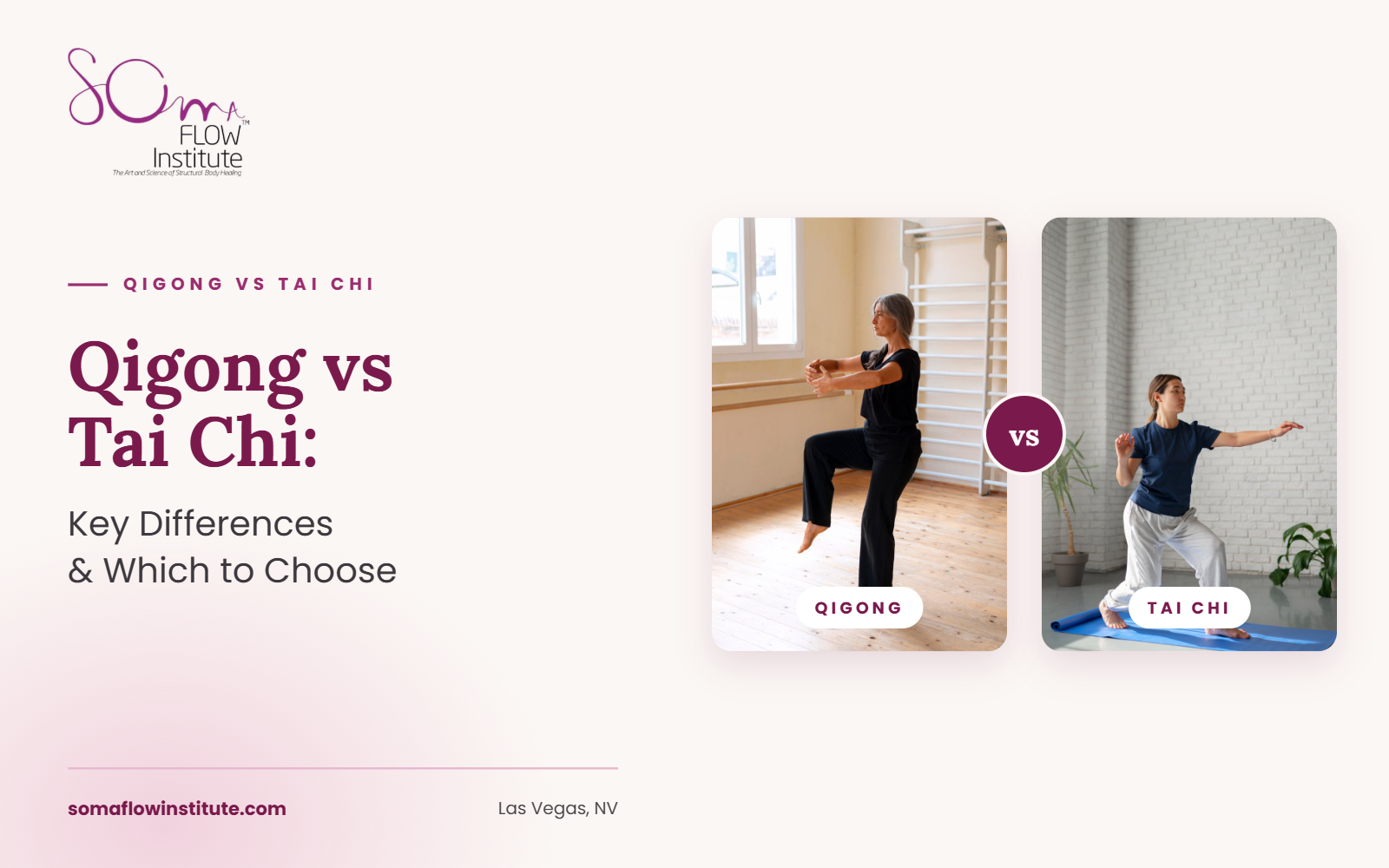
Qigong and tai chi both use gentle movement, breathing, and focused attention, but they differ in how they’re practiced. Qigong often uses simple, repeated exercises, while tai chi follows connected movement sequences rooted in martial arts.
It’s hard to tell, and there’s a good reason for that. These two Chinese mind-body practices are closely related. But they are not the same thing. Both practices have their own benefits, but they work in different ways. Knowing what makes them similar and different can help you choose what feels right for your body and goals.
What Is Qigong?
Qigong (pronounced “chee-gong”) is a traditional Chinese practice combining gentle movement, breathing, and mental focus to support overall well-being.
The word combines two ideas. “Qi” means energy or breath. “Gong” means a skill you build through steady practice.
Qigong is often translated as “energy cultivation” or “skillful work with qi.” In traditional Chinese thought, qi is associated with vital energy, while gong refers to skill developed through practice.
Qigong developed in China thousands of years ago as part of traditional Chinese medicine. There are hundreds of different qigong styles. Some use flowing movements. Others are still, like standing quietly or sitting while you focus on your breath.
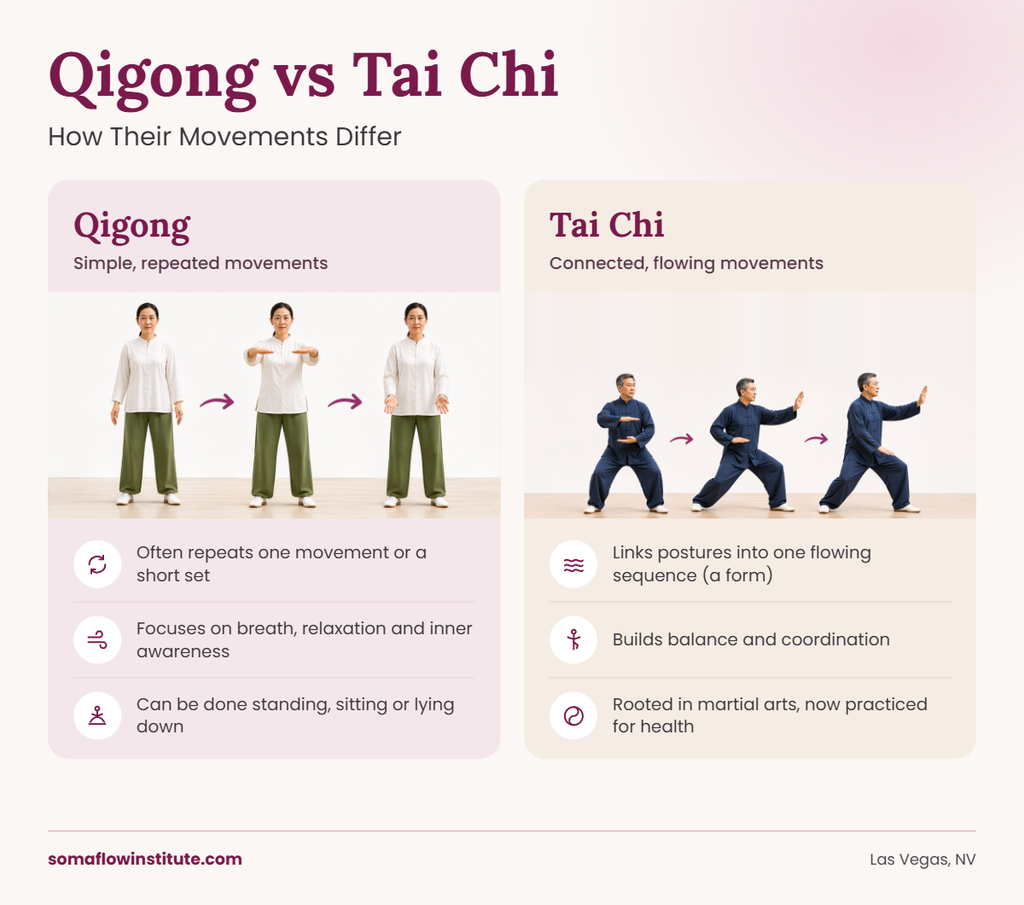
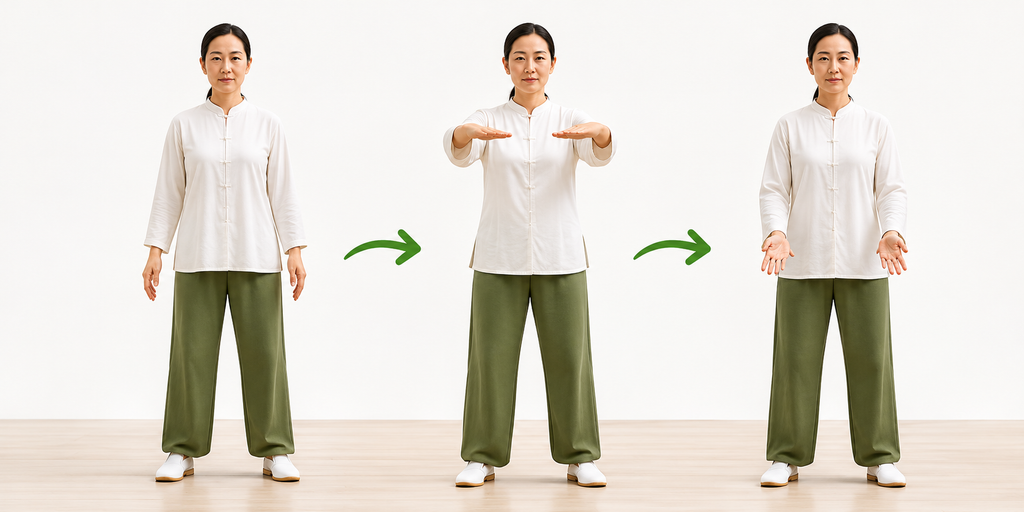
Most qigong exercises are short and simple. You might repeat one movement many times, such as slowly raising and lowering your arms as you breathe. A well-known example is the Eight Brocades (Baduanjin), a set of eight gentle movements that many people practice daily.
What Is Tai Chi?
Tai chi is a practice of slow, flowing movements linked together in a set order, done with calm breathing and a focused mind. Its full name is tai chi chuan, which is often translated as “supreme ultimate fist.”
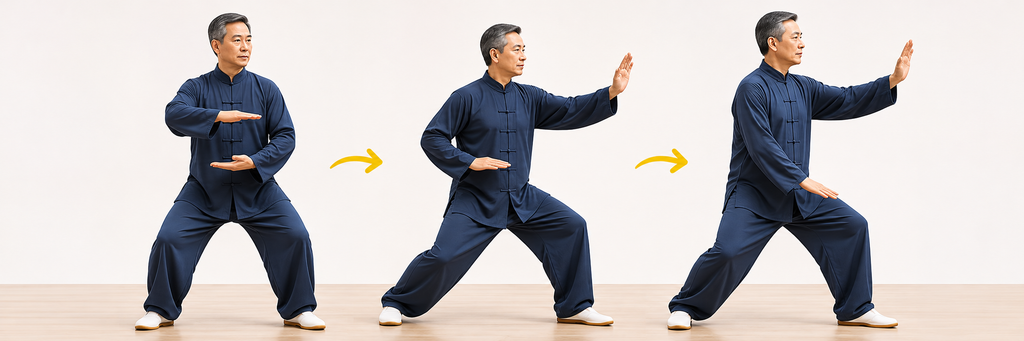
Tai chi has its roots in traditional Chinese martial arts. Over time, it became much more focused on health, balance and relaxation. Today, tai chi is widely practiced for health, balance, and relaxation, although its martial arts traditions remain important.
Tai chi is practiced as a “form.” A form is a sequence of postures that flow from one into the next, a bit like a slow dance. Short forms may have a handful of movements. Long forms can have dozens. There are several tai chi styles, including Yang (the most common), Chen, Wu and Sun.

A Different Way of Working With the Body
SomaFlow offers an approach centered on embodied practice and facilitation that many practitioners find more sustainable over time, prioritizing awareness, adaptability, and working with the body rather than against it.
Is Tai Chi a Form of Qigong?
Yes. When tai chi is practiced for health, it’s considered a form of qigong. According to the U.S. National Center for Complementary and Integrative Health (NCCIH), tai chi is one of many forms of qigong that originated in China.
Here’s a simple way to think about it: qigong is the whole family, and tai chi is one well-known member of that family. All tai chi includes qigong principles, but not all qigong is tai chi.
Qigong vs Tai Chi: Key Differences
Qigong and tai chi share the same roots, but they feel quite different to practice. Here’s a side-by-side look:
| Qigong | Tai Chi | |
| Origin | Ancient health, breathing and meditation practices | A martial art, later focused on health |
| Structure | Easy movements repeated in a simple pattern or holding the body in one position. | Long, flowing sequences called forms |
| Learning curve | Easier to start | Takes longer to learn a full form |
| Main focus | Breath, relaxation and inner awareness | Flowing movement, balance and coordination |
| Position | Standing, sitting or even lying down | Mostly standing, with stepping and weight shifts |
| Space and time | Little space; a few minutes is enough | More room to step; longer sessions |
| Martial use | Rare | Built in, through partner drills like push hands |
Purpose
The main difference becomes clearer when you practice. Qigong often involves repeating a slow, gentle movement while staying aware of how you breathe and hold your body.
In tai chi, you move through a connected sequence that requires you to remember each position and coordinate your steps. Both encourage mindful movement, but tai chi usually takes more time to learn.
Structure
Qigong usually repeats one simple movement or a short set. Tai chi links many movements into one long, continuous form that you learn step by step.
Learning Curve
Most people can learn a basic qigong exercise in one session. Learning a full tai chi form can take weeks or months of steady practice, usually with a teacher.
Physical Demand
Both are gentle and low-impact. Tai chi asks a bit more of your legs and balance because of its stepping, turning and weight shifts. Qigong can be adapted for people who need to sit or move very little.
How Qigong and Tai Chi Are Alike
Even with their differences, qigong and tai chi have a lot in common:
- Slow, mindful movement. Both ask you to move with full attention.
- Coordinated breathing. Both link the breath to the movement.
- Relaxed focus. Both are often called “moving meditation.”
- Shared roots. Both come from traditional Chinese ideas about qi and the balance of yin and yang.
- Gentle on the body. Both are low-impact and can be adapted for many ages and fitness levels.
Qigong vs Tai Chi Benefits: What Research Says
Research on both practices is promising, but it’s still growing. Here’s what the NCCIH reports:
- Balance and falls: Tai chi may improve balance and help prevent falls in older adults and in people with Parkinson’s disease.
- Quality of life and fitness: Both practices may support well-being, but your goals can guide your choice. Tai chi may be particularly useful if you want to work on balance and coordination. Qigong may suit you better if you prefer short, adaptable exercises that emphasize breathing and body awareness.
- Mixed evidence: For many conditions, results are mixed, and researchers say more high-quality studies are needed.
It’s important to keep expectations realistic. Qigong and tai chi are not a cure for any condition, and they’re not a replacement for medical care. If you have a health condition, are pregnant or haven’t exercised in a while, talk with your health care provider before you start.
The Somatic Side: What Each Practice Teaches Your Body
At SomaFlow Institute, we look at movement through a somatic lens. That means we focus on how a movement feels from the inside, not just how it looks from the outside. From this view, qigong and tai chi each train different parts of your body awareness.
Qigong builds inner awareness. Because the movements are simple and repeated, your attention can turn inward. You become more aware of your breathing, how you hold your body, and areas that feel tight or tense. Over time, many people find it easier to notice tension and let it go.
Tai chi builds whole-body coordination. Because the form keeps moving, your attention goes to weight shifts, balance, and how each movement flows through your whole body. You learn how your feet, hips, spine, and arms work together.
Try noticing how your weight shifts through your feet, whether your shoulders tighten, and how your breathing changes as you move. These small observations can help you develop greater body awareness during either practice.
My experience with qigong has taught me to pay closer attention to how my body moves and responds. I’ve learned that even small changes in breathing, posture, and tension can reveal a lot about how I’m feeling. It’s not just about performing movements correctly. It’s about developing awareness and understanding what your body needs.
Glenn Hall, Co-Founder of SomaFlow Institute
Qigong or Tai Chi: Which Should You Choose?
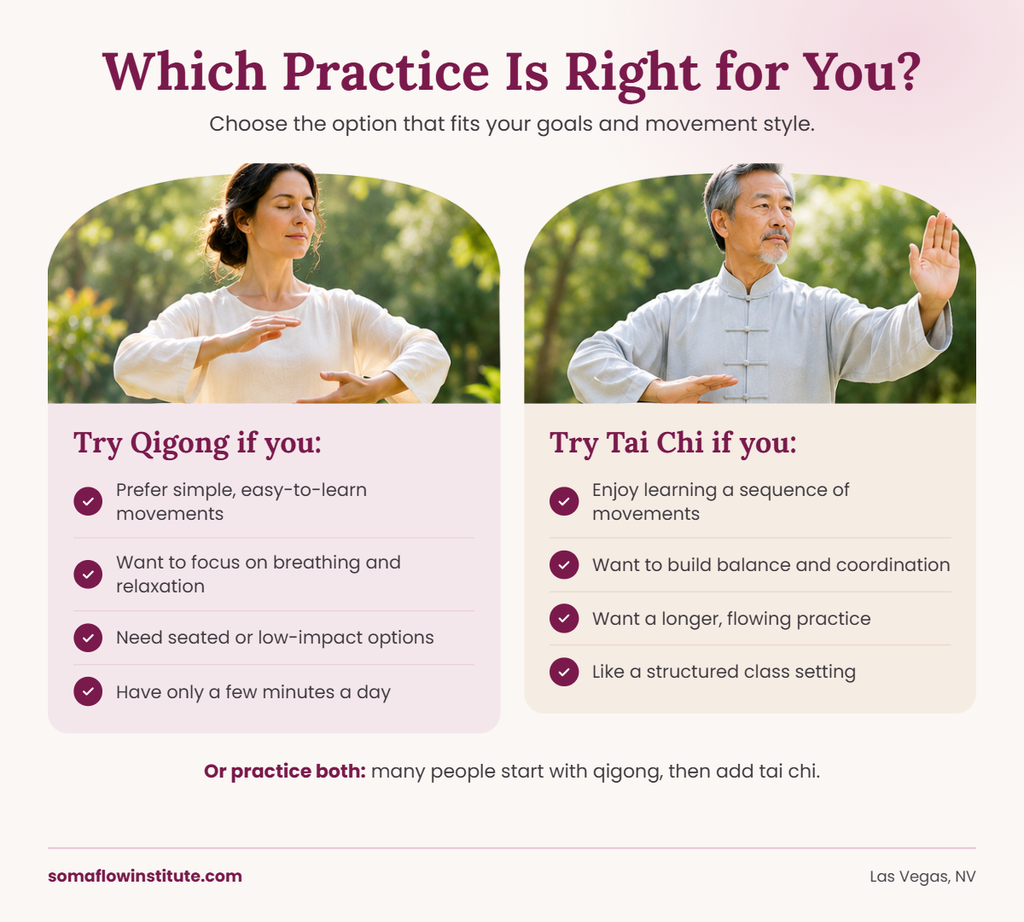
Choose qigong if you prefer short, flexible exercises focused on breathing and awareness. Try tai chi if you enjoy learning movement sequences and want to practice balance and coordination.
Choose qigong if you:
- Want something simple you can start at home today
- Prefer gentle exercises you can do while seated or have difficulty moving comfortably.
- Mainly want relaxation, better breathing and body awareness
- Only have a few minutes a day
Choose tai chi if you:
- Enjoy learning a structured sequence, step by step
- Want to work on balance, coordination and leg strength
- Like the idea of a practice with martial art roots
- Want a longer, flowing practice, often in a group class
Try both. Many people start with qigong to learn relaxed breathing and body awareness, then add tai chi later.
For beginners: If you’re completely new to mindful movement, try qigong first. You can begin with one simple exercise without memorizing a full routine. If you enjoy structured movement and want to develop coordination, tai chi may be a better long-term fit.
For seniors: If balance is your main concern, tai chi may be worth exploring because research supports its use in reducing fall risk among older adults. If standing is difficult, seated qigong may be a more comfortable starting point.
How to Get Started
You can begin practicing qigong in comfortable clothes without buying any special equipment. Here’s how to start:
- Try a simple qigong movement: Stand comfortably with your feet about hip-width apart. Slowly raise your arms in front of you as you breathe in, then lower them as you breathe out. Repeat a few times without forcing your breathing or stretching beyond a comfortable range. You can also try this movement while seated.
- Find a qualified teacher. Tai chi forms are hard to learn correctly from videos alone. A teacher can check your posture and pace.
- Ask about training. There’s no single standard certification for qigong or tai chi teachers, so ask about their training and experience.
- Move at your own pace. Choose movements that feel comfortable and avoid pushing your body too far.
Want to build the body awareness that supports any movement practice? Explore SomaFlow’s Courses & Workshops in Las Vegas.
Full-Body SomaFlow Course
An immersive introduction to embodied awareness, self-practice, and whole-body integration through the SomaFlow method.
Frequently Asked Questions
Is It Okay to Practice Qigong and Tai Chi on the Same Day?
Yes, you can practice both on the same day. Some people use gentle qigong exercises to warm up before tai chi because they encourage relaxed breathing and body awareness. You can practice each one on its own, based on how much time and energy you have.
Do You Need an Instructor to Learn Tai Chi?
You can learn basic tai chi movements through beginner videos, but a qualified teacher can help you improve your posture, balance, and technique. This is especially helpful when learning longer forms or movements that involve turning and shifting your weight.
How Long Should Beginners Practice Qigong or Tai Chi?
Start with 5 to 10 minutes of comfortable movement and gradually increase your practice time as you gain confidence. You don’t need long sessions to begin learning. Focus on moving slowly, breathing naturally, and maintaining good posture rather than completing a full routine.
Can You Practice Qigong or Tai Chi Without Special Equipment?
Yes. Both practices require little or no equipment. Choose clothes that make movement easy. Practice in an open area with enough space to move safely. Supportive, non-slip footwear can help when practicing standing movements, especially if balance is a concern.
Begin Your Somatic Practice
Whether you begin with qigong or tai chi, learning to notice your breath, posture, and movement can be a useful first step toward greater body awareness. If you’d like to explore mindful movement through SomaFlow’s somatic approach, discover our courses and workshops or schedule a consultation to discuss your goals.
At SomaFlow Institute, we help you build that awareness through attention, movement, and touch.
About the Author
Glenn Hall
Glenn Hall knows what it’s like to live with pain. Born with a serious back condition, he grew up dealing with stiffness, poor posture, and discomfort that never fully went away. Later in life, his challenges intensified: he suffered two complete biceps tears and two supraspinatus muscles retracted off the bone.