10 Types of Somatic Therapy for Trauma and Nervous System Healing

We hope you enjoyed reading and learning more about the body and mind. If you would like to connect with our experts, click here
Author: Glenn Hall | Co-Founder of SomaFlow™ Institute
Somatic therapy uses the body to help with stress, trauma, and emotional healing. It helps people notice what is happening inside the body, not just in the mind, using movement, breathing, and awareness.
Many people feel stuck in stress, anxiety, or tension even after talking about their problems.
That is because the body can hold on to stress through tight muscles, shallow breathing, and nervous system patterns.
Somatic therapy helps release and regulate these patterns by working directly with the body. Different types of somatic therapy address different needs, such as trauma healing, movement, mindfulness, or nervous system balance.
At SomaFlow Institute in Las Vegas, somatic movement and embodied practice training help people build body awareness through slow, guided movement.
The focus is on noticing the body, not fixing it, so you can understand how it moves, holds tension, and responds to stress in daily life.
Interested in Trauma-Informed Somatic Education?
SomaFlow Institute offers advanced somatic training for massage therapists and wellness professionals seeking body-centered, nervous-system-informed approaches to sustainable client care.
What Is Somatic Therapy?
Somatic therapy is a body-based approach that helps you understand the connection between your body, emotions, and nervous system.
Instead of only talking about problems, it helps you notice what is happening in your body, such as tight muscles, changes in breathing, posture, or feelings of tension and stress.
Somatic therapy includes:
- Body awareness
- Nervous system regulation
- Movement
- Emotional processing
- Breath awareness
- Physical sensation tracking
At its core, somatic therapy is based on a simple idea: the body can hold stress and trauma.
When someone goes through long-term stress, anxiety, or trauma, the nervous system can stay stuck in survival mode even after the situation is over.
Somatic therapy helps the body calm, release tension, and return to a more balanced state by working with physical sensations and nervous system responses.
10 Types of Somatic Therapy for Trauma, Stress, and Nervous System Healing
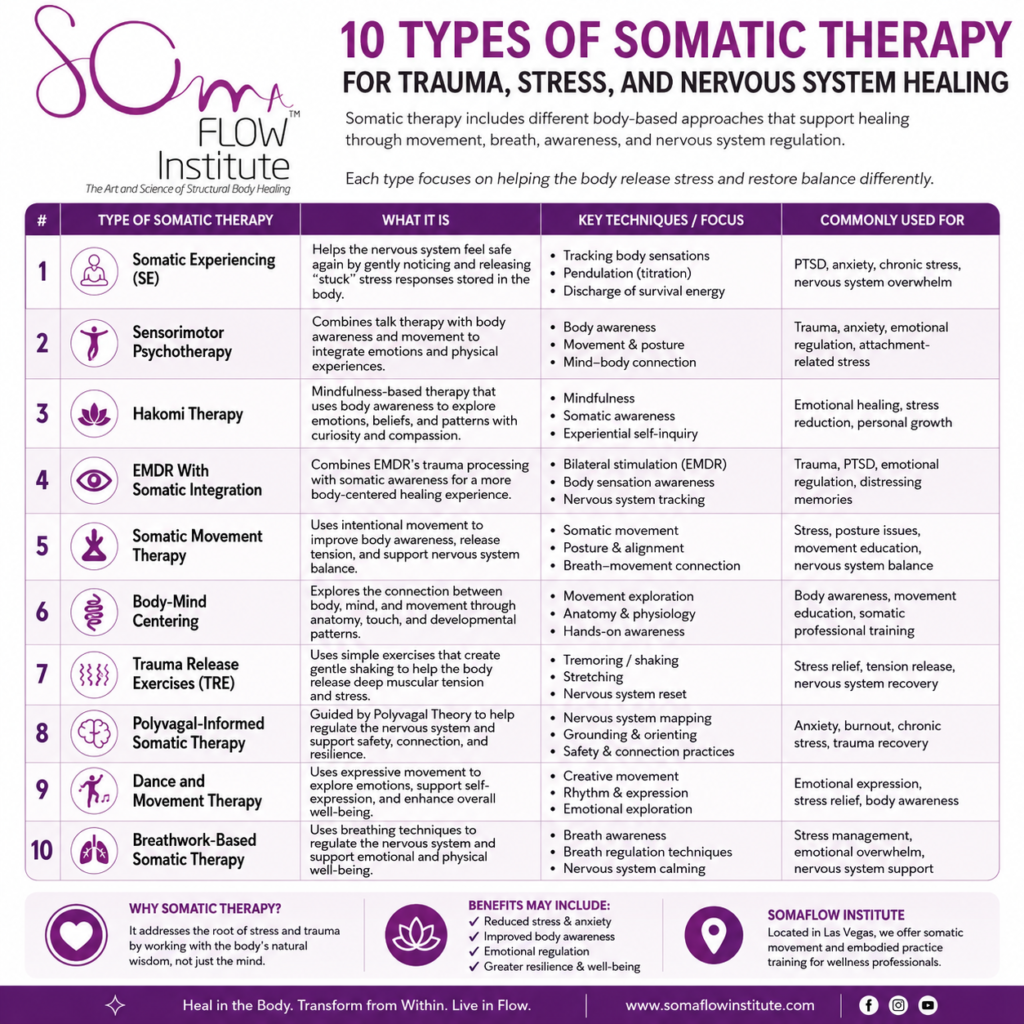
Somatic therapy includes different body-based approaches that support healing through movement, breath, awareness, and nervous system regulation.
Each type focuses on helping the body release stress and restore balance.
1. Somatic Experiencing (SE)
Somatic Experiencing is one of the most well-known types of somatic therapy for trauma and stress.
It was created by Peter Levine and focuses on helping the nervous system feel safe again.
Instead of talking in depth about traumatic memories, this approach helps people gradually notice physical sensations in the body, such as tightness, shaking, tension, or changes in breathing.
The goal is to help the body release stress responses that may still feel “stuck” after difficult experiences.
This type of therapy is often used for PTSD, anxiety, chronic stress, and nervous system overwhelm.
2. Sensorimotor Psychotherapy
Sensorimotor Psychotherapy combines traditional talk therapy with body awareness and movement.
During sessions, clients learn to notice how emotions show up physically through posture, tension, facial expressions, or movement patterns.
The therapist helps connect emotional experiences with what is happening in the body at the same time.
This approach is commonly used for trauma, anxiety, emotional regulation, and attachment-related stress.
3. Hakomi Therapy
Hakomi Therapy is a gentle and mindfulness-based form of somatic therapy that focuses on self-awareness.
Clients are encouraged to slow down, stay present, and notice their thoughts, emotions, and body responses without judgment.
Small physical reactions, breathing patterns, or emotional shifts are used to better understand deeper emotional habits and beliefs.
Hakomi is often used for emotional healing, stress reduction, and personal growth.
4. EMDR With Somatic Integration
One common question is:
Is EMDR somatic therapy?
EMDR itself is mainly a trauma therapy that uses eye movements or other forms of bilateral stimulation to help process difficult memories.
However, many therapists now combine EMDR with somatic techniques by helping clients notice bodily sensations, changes in breathing, and nervous system reactions during sessions.
This creates a more body-centered approach to trauma healing and emotional regulation.
5. Somatic Movement Therapy
Somatic Movement Therapy focuses on how the body moves, holds stress, and responds to tension.
Instead of focusing primarily on talking, this approach uses slow, intentional movement to improve body awareness and nervous system balance. People learn how stress may affect posture, breathing, and movement patterns in daily life.
This type of somatic work is especially popular among massage therapists, yoga professionals, and movement educators.
At SomaFlow Institute in Las Vegas, somatic movement and embodied practice training help wellness professionals build this kind of body awareness through guided movement and nervous system-informed learning.
6. Body-Mind Centering
Body-Mind Centering is a movement-based approach that explores how the body and mind work together.
It uses movement, anatomy, touch, and awareness practices to help people better understand how their bodies move and respond. This approach often focuses on developmental movement patterns and body awareness.
It is commonly used by dancers, movement teachers, and somatic educators.
7. Trauma Release Exercises (TRE)
Trauma Release Exercises uses simple physical exercises to help the body release stress and tension naturally.
These exercises can create gentle shaking or trembling in the muscles, which some practitioners believe helps the nervous system release built-up stress.
TRE is often used for stress relief, nervous system recovery, and the release of physical tension.
8. Polyvagal-Informed Somatic Therapy
This type of somatic therapy is based on Polyvagal Theory, which explains how the nervous system responds to stress and safety.
The focus is on helping people notice when their body is in survival mode, shutdown mode, or a calm and connected state. Therapists use body awareness, grounding, and nervous system regulation techniques to help clients feel safer and more balanced.
This approach is commonly used for anxiety, burnout, chronic stress, and trauma recovery.
9. Dance and Movement Therapy
Dance and Movement Therapy uses expressive movement to support emotional healing and self-expression.
People may use guided movement, rhythm, or creative motion to explore emotions that are difficult to express with words alone.
Movement becomes a way to process stress, emotions, and personal experiences through the body.
This approach is often used for emotional expression, stress relief, and body awareness.
10. Breathwork-Based Somatic Therapy
Breathwork-based somatic therapy uses breathing techniques to help calm the nervous system and improve body awareness.
Because breathing is closely connected to stress and emotional states, changing breathing patterns can help people feel more grounded and regulated.
Sessions may include slow breathing, guided breath exercises, or simple awareness practices.
This type of somatic therapy is commonly used for stress management, emotional overwhelm, and nervous system support.

A Different Way of Working With the Body
SomaFlow offers an approach centered on embodied practice and facilitation that many practitioners find more sustainable over time, prioritizing awareness, adaptability, and working with the body rather than against it.
7 Common Somatic Therapy Techniques
Somatic therapy uses simple body techniques to help you feel calm, safe, and more aware of your body. It focuses on what you feel in the present moment.
1- Grounding Exercises
Grounding helps you feel more present and connected to your surroundings.
For example, you might press your feet into the floor, notice the texture of a chair, or name five things you can see in the room.
This is often used when someone feels anxious, overwhelmed, or disconnected.
2- Breathwork
Breathwork uses slow, controlled breathing to calm the body. For example, breathing in slowly for a few seconds and breathing out longer can help reduce stress and bring the body out of “fight or flight” mode.
3- Body Scanning
Body scanning is the practice of slowly bringing attention to different areas of the body. For example, you might start at your head and move down to your feet, noticing tightness in the shoulders, warmth in the chest, or tension in the jaw.
4- Movement Awareness
This technique helps you notice how you move throughout the day. For example, a therapist might ask you to notice how you sit at a desk, how you walk, or where your body feels stiff or tense when you stand.
Even simple somatic awareness of posture and movement habits can change how the body holds tension throughout the day.
5- Nervous System Regulation
This is about helping your body move between stress and calm more healthily. For example, noticing when your body feels tense and using breathing or grounding to help it settle again.
6- Pendulation
Pendulation means gently moving between feeling stressed and feeling safe. For example, you might focus on a difficult feeling for a few seconds, then shift attention to something calming like your breath or your feet on the ground.
7- Titration
Titration means working with stress in very small, safe steps. For example, instead of fully focusing on a painful memory, you notice only a small part of how it feels in your body, then take a break and return when ready.
3 Common Misunderstandings About Somatic Therapy
Many people misunderstand what somatic therapy actually is.
Because it involves the body, movement, and nervous system, people often assume it is only physical exercise or relaxation.
In reality, somatic therapy is much broader than that.
1- It Is Not Just Stretching or Movement
While some somatic approaches include gentle movement, somatic therapy is not simply stretching or exercise classes.
The goal is to help people notice how stress, emotions, and nervous system patterns show up in the body.
2- It Is Not Only Talking About Emotions
Unlike traditional talk therapy, somatic therapy also focuses on physical sensations, breathing, posture, tension, and nervous system responses.
The body becomes part of the healing process, not just conversation.
3- It Is Not One Single Technique
Somatic therapy is an umbrella term that includes many different approaches. Some methods focus on trauma recovery, while others focus on movement, mindfulness, body awareness, or nervous system regulation.
A Different Way of Working With the Body
SomaFlow offers an approach centered on embodied practice and facilitation that many practitioners find more sustainable over time, prioritizing awareness, adaptability, and working with the body rather than against it.
Final Note!
Somatic therapy includes many body-based ways to help with stress, trauma, emotions, and nervous system balance.
As this field grows, more therapists and wellness professionals are learning somatic skills to support their clients safely.
If you are a therapist or wellness practitioner and want to learn somatic movement and body awareness skills, SomaFlow Institute offers simple training you can use in your sessions.
Enroll in our courses to build real somatic skills, understand the body, and bring more depth to your client work.
About the Author
Glenn Hall
Glenn Hall knows what it’s like to live with pain. Born with a serious back condition, he grew up dealing with stiffness, poor posture, and discomfort that never fully went away. Later in life, his challenges intensified: he suffered two complete biceps tears and two supraspinatus muscles retracted off the bone.