5 Ways Somatic Movement Supports Nervous System Regulation

We hope you enjoyed reading and learning more about the body and mind. If you would like to connect with our experts, click here
Author: Glenn Hall | Co-Founder of SomaFlow™ Institute
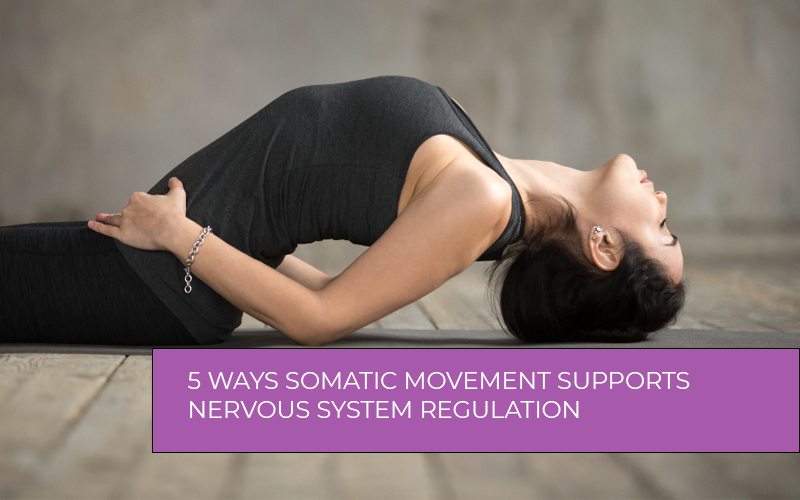
Somatic movement supports nervous system regulation by training your attention and sensation to work together. It helps the body shift out of stress, release stored tension, and find its natural balance.
Tight shoulders, shallow breathing, poor sleep, chronic pain. They are signs that the body is stuck in a state it cannot get out of on its own.
And for therapists, watching clients carry that burden session after session without real change is frustrating.
At SomaFlow Institute, we teach therapists to use movement perception, body awareness and hands-on somatic techniques to help clients reset.
These are the five ways somatic movement supports nervous system regulation. We recommend these to every serious therapist.
First: What is the Nervous System and the Body?
Your autonomic nervous system runs most of your body’s automatic functions. Heart rate, digestion, breathing, and stress response. It has two main branches:
- The sympathetic nervous system. This is your “go mode.” It kicks in when you are active, alert, or under stress.
- The parasympathetic nervous system. This is your “rest and recover” mode. It helps you slow down, digest and heal.
These two systems are always working together.
Movement, breathing patterns, posture, and even where you place your attention can all shift.

A Different Way of Working With the Body
SomaFlow offers an approach centered on embodied practice and facilitation that many practitioners find more sustainable over time, prioritizing awareness, adaptability, and working with the body rather than against it.
What Is Nervous System Regulation?
Nervous system regulation simply means your body’s ability to move smoothly between those two states. Active when it needs to be, calm when it can be.
Most people today are stuck in “go mode” far too long. Chronic stress, poor posture and shallow breathing keep the sympathetic system dialed up.
Over time, this affects sleep, pain levels, mood and movement quality.
Practices that build awareness of breathing, body sensations, and movement patterns can help the body become more flexible in how it shifts between these states.
That flexibility is what regulation really looks like in real life.
5 Ways Somatic Movement Coordination Helps Nervous System Regulation
The nervous system does not regulate itself through willpower or force. It responds to how you move, what you notice and where you place your attention.
1. Somatic Movement Brings Attention Inward
The first thing somatic movement does is redirect your attention. Instead of focusing on the outside world, you start noticing what’s happening inside your body.
Where is there tension? Is your breath shallow or full? Are you gripping muscles you don’t need to?
This kind of internal perception, what scientists call interoception, is deeply connected to how the nervous system reads your body’s safety.
When you slow down and pay attention, you are signaling to the nervous system that it’s okay to shift into a more relaxed state.
Movement perception grows stronger the more you practice directing attention and sensation inward. Over time, this becomes less of an effort and more of a natural way of inhabiting your body.
2. Slow Movement Gives the Nervous System Time to Respond
Traditional exercise is fast, goal-driven and performance-focused. Somatic movement is the opposite. It’s deliberately slow.
Slower movement gives your nervous system time to register what’s happening.
You can feel pressure changes, notice how muscles engage and release and observe shifts in coordination that happen too fast to catch during regular activity.
This slower pace also activates the parasympathetic response and helps the body shift out of high-alert mode and into a state of rest and recovery.
3. It Changes How You Experience Breathing Patterns
Breathing is one of the most direct pathways to the autonomic nervous system.
Short, shallow breaths signal stress. Slow, full breaths signal safety.
Somatic practices pay attention to breathing.
As you move slowly and pay attention, your breathing often naturally deepens and slows down. This simple shift can lower tension, reduce muscle holding, and invite the body into a regulated state.
For therapists working with clients who carry chronic stress or trauma in the body, helping them reconnect with their breathing through embodied practice is one of the most powerful tools.
4. It Reveals Hidden Tension and Movement Patterns
Most people carry tension in their bodies without realizing it.
Tight hips, a locked jaw, hunched shoulders. These patterns become so familiar that the nervous system starts treating them as normal.
Somatic movement helps you spot these patterns by encouraging attentive observation during movement.
When you notice an area of holding or restriction, you get a window into how your nervous system has been organizing the body in response to stress, past injuries, or habitual postures.
Somatic awareness alone can start to release these patterns. The body doesn’t need to be forced or stretched aggressively but it needs to be noticed.
5. Repeated Practice Builds a Responsive Body-Mind Connection
One session of somatic movement can feel calming.
But the real power comes from consistent, structured practice over time.
Through repeated somatic learning, people develop a stronger body–mind connection.
They notice when tension is building, are more sensitive to shifts in their nervous system, and are equipped to return to balance after stress.
This is exactly what makes somatic movement workshops and learning programs so valuable for therapists.
When you understand this process in your own body, you can guide your clients through it with far greater skill.
How SomaFlow Institute Helps Therapists Master This Work?
At SomaFlow Institute in Las Vegas, we teach licensed massage therapists, bodywork practitioners and movement professionals to use somatic and hands-on methods.
The Somaflow approach mixes science-based techniques with Eastern healing practices to help clients recover from chronic pain, stress, old injuries and poor movement.
Through in-person workshops, small group sessions and professional certifications, SomaFlow gives you hands-on experience you can use immediately.
Final Note!
Your nervous system is always listening. It picks up on how you move, how you breathe and where your attention goes. Somatic movement gives you a direct way to speak its language.
When you slow down and turn attention inward, something shifts. The body stops bracing. Breathing deepens. The tension that has been sitting there for years starts to let go.
For therapists, this is more than interesting knowledge. It is the difference between sessions that give temporary relief and sessions that create change in your clients.
If you are ready to work at that level, SomaFlow Institute in Las Vegas offers the training you need. Come to one of our somatic movement workshops for a full-body experience and feel this work in your own body first.
About the Author
Glenn Hall
Glenn Hall knows what it’s like to live with pain. Born with a serious back condition, he grew up dealing with stiffness, poor posture, and discomfort that never fully went away. Later in life, his challenges intensified: he suffered two complete biceps tears and two supraspinatus muscles retracted off the bone.