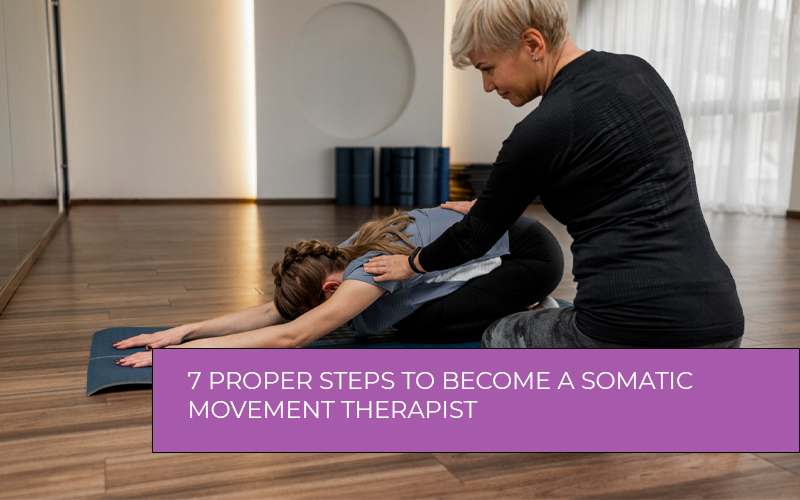
7 Proper Steps to Become a Somatic Movement Therapist

We hope you enjoyed reading and learning more about the body and mind. If you would like to connect with our experts, click here
Author: Glenn Hall | Co-Founder of SomaFlow™ Institute
Becoming a somatic movement therapist means completing a recognized somatic training, understanding your professional scope, and developing a personal body-awareness practice that grounds everything you teach.
If you are a massage therapist, you know that the body holds stories. You feel tension that clients cannot describe in words. And you sense where someone is bracing, protecting, or shutting down.
That understanding puts you in a powerful position to explore somatic movement work.
But what does it actually mean to become a somatic movement therapist? And how do you get there without starting over from scratch?
The SomaFlow™ Institute offers in-person workshops and small group learning experiences in Las Vegas for practitioners who want a clear path into somatic movement facilitation.
What Is a Somatic Movement Therapist?
A somatic movement therapist guides people in becoming more aware of how their body moves, hold tension, and responds to stress. The word somatic simply means “of the body.” The work is slow, intentional, and built around internal awareness.
Unlike massage, where your hands do much of the work, somatic movement guides the client’s own attention. You are teaching them to feel themselves more clearly.
This is a meaningful shift. And for massage therapists, it is often a natural one.
Step 1: Difference Between Somatic Education and Somatic Therapy
This step matters a lot. Read it carefully.
The term somatic movement therapist means different things in different places. Some somatic practitioners are licensed mental health therapists or physical therapists who add somatic techniques to clinical work. This is called somatic psychotherapy or somatic therapy.
Others work as somatic educators or somatic movement facilitators. They offer body awareness sessions that are educational, not clinical. This is non-therapeutic somatic work.
As a massage therapist, you will most likely work as a somatic educator or somatic facilitator. You are not a licensed therapist unless you hold a separate clinical license.
This does not make your work less powerful. Somatic body awareness education is in high demand. It complements massage therapy beautifully. But you need to know which lane you are in before you spend money on training.
Step 2: Build Your Own Body Awareness Practice First
You cannot teach what you have not lived.
Before you work with clients, start a personal somatic movement practice. This means slow, intentional movement where you pay attention to how your body feels from the inside. Not how it looks. Not how well it performs.
Try this daily. Even five to ten minutes is enough to start.
Notice your breath while you work. Notice where you hold tension in your shoulders, jaw, or chest. These are somatic cues. Learning to feel them in yourself is the first step toward helping others feel them too.
Research shows that interoceptive and proprioceptive awareness are core to how the nervous system regulates stress.
Most somatic movement training programs, including nervous system-based movement programs and body-centered education courses, expect students to have a personal practice. Start before you apply.
Step 3: Research Somatic Training Programs
There are many somatic movement certifications and training paths available. Some well-known ones include:
- The Feldenkrais Method focuses on movement awareness and neuromuscular re-education
- Body-Mind Centering explores embodiment, developmental movement, and body systems
- Hanna Somatics is based on pandiculation and releasing chronic muscle tension
- Continuum Movement uses breath, sound, and fluid movement for nervous system awareness
- SomaFlow™ is a structured somatic educator program for practitioners who want a clear, grounded framework for teaching body awareness.
When comparing somatic practitioner programs, ask these questions:
- Is the training designed for bodywork professionals and movement educators?
- Does it include supervised practice with real people?
- Is the scope educational or clinical? What do graduates say about the support they received after training?
A strong somatic training will cover the autonomic nervous system, somatic movement patterns, breath awareness techniques, interoception, proprioception, and grounded touch awareness.
Step 4: Complete a Foundational Somatic Training
Find a program. Then commit to it fully.
Somatic movement is not something you can learn from a video or a book alone. You have to feel it. You have to be guided through it. And you have to practice guiding others while someone watches and gives feedback.
Look for somatic training programs that include:
- Nervous system education and polyvagal theory basics
- Guided somatic movement sessions
- Breath awareness and interoceptive awareness skills
- Hands-on touch awareness in a non-clinical, educational context
- Mentorship hours and supervised client practice
At the SomaFlow™ Institute, in-person workshops and small group intensives offer this exact structure. Students learn somatic facilitation skills in a hands-on environment, not just theory in a classroom.
Whatever program you choose, finish it. Do every hour. Show up with full attention.
Step 5: Practice on Real People Before You Charge for It
Do not add somatic movement sessions to your service menu the day you finish training.
First, practice. Offer free sessions to people you know. A trusted colleague. A willing friend. A current massage client who is open to trying something new.
After each practice session, ask yourself: What felt clear? What felt awkward? Where did I rush? Where did I lose the thread?
Somatic facilitation is a different skill from massage therapy. In massage, you apply pressure and technique. In somatic work, you slow down, ask questions, and hold space for the client to notice their own body. That shift takes real practice before it feels natural.
Practice until your pacing feels calm, your language feels simple, and your presence feels grounded.
Step 6: Define Your Scope of Practice Clearly
When you are ready to offer somatic movement work professionally, be very clear about what you do and what you do not do.
i. What you do not provide
Somatic movement education is not psychotherapy or medical care. You do not diagnose conditions or treat trauma, anxiety disorders, or chronic pain. These concerns fall under the purview of licensed medical or mental health professionals.
II. What you do provide
You offer somatic body awareness education. Sessions focus on slow, intentional movement and breath awareness. Clients learn to notice tension patterns, breathing habits, and physical stress responses.
III. Your goal:
Focus on awareness, self-regulation, and long-term resilience, not clinical treatment.
This is a legitimate and valuable offering. But it needs clear language.
When you talk to clients, say something like: “I offer somatic movement education. It is a body awareness practice, not therapy or treatment.”
This protects you professionally. It also helps clients understand what they are booking.
Think about offering somatic awareness sessions as a standalone service or paired with massage therapy. Many clients will want both. Others will prefer one. Give them clear, simple options.
Step 7: Keep Learning. Keep Practicing.
Somatic work is not a box you check. It is a practice you return to again and again.
The more sessions you guide, the more you will notice. The more you stay curious, the better you become.
Stay active in the somatic movement community. Take continuing education courses in nervous system regulation, trauma-informed movement, and embodied learning. Attend somatic workshops. Receive sessions from other somatic educators whose work you respect.
Your own body experience will always be your best teacher. Keep listening to it.

A Different Way of Working With the Body
SomaFlow offers an approach centered on embodied practice and facilitation that many practitioners find more sustainable over time, prioritizing awareness, adaptability, and working with the body rather than against it.
A Note for Massage Therapists!
You are not starting from zero. You have years of body knowledge, hands-on skill, and an intuitive sense of how the nervous system responds to touch and attention.
Somatic movement work is not a departure from that. It is an expansion of it.
The clients who come to you for a massage are often carrying tension they do not know how to release. Adding somatic awareness to your practice gives them tools they can use between sessions and gives you a deeper way to serve them.
That is worth the time it takes to do it well.
If you are ready for a career upgrade, check out SomaFlow™ workshops and training courses.
The SomaFlow™ Institute offers in-person workshops and small group training experiences in Las Vegas for practitioners like you.
You will learn a grounded framework for somatic movement facilitation, practical skills you can bring back to your practice right away.
DISCLAIMER: SomaFlow™ is an educational framework, not therapy or clinical training. Explore upcoming courses to see what fits where you are right now.
About the Author
Shoshi Hall
Shoshi Hall’s journey into healing began on the stage. As a professional dancer, she experienced both the beauty and the vulnerability of the human body. Years of rigorous training left her with persistent neck and lower back pain, discomfort that touched not only her body but her spirit as well.