
4 Myofascial Release Dangers + Tips for Massage Therapists

We hope you enjoyed reading and learning more about the body and mind. If you would like to connect with our experts, click here
Author: Shoshi Hall | Co-Founder of SomaFlow™ Institute
Myofascial release can be dangerous if applied without proper technique or anatomical awareness, especially for massage therapists working with clients who have complex health backgrounds.
As a massage therapist, you have likely heard glowing feedback about myofascial release therapy, how it melts pain away, releases emotional blocks, and increases mobility.
When done too forcefully, applied on contraindicated areas, or used on the wrong client, myofascial release can trigger adverse reactions, nerve compression, inflammation, or even emotional breakdowns. This article is your professional guide to doing it right and knowing when not to do it at all.

A Different Way of Working With the Body
SomaFlow offers an approach centered on embodied practice and facilitation that many practitioners find more sustainable over time, prioritizing awareness, adaptability, and working with the body rather than against it.
A Quick Recap: What Exactly Is Myofascial Release?
As you already know, myofascial release (MFR) is a soft-tissue technique that targets fascial restrictions to improve movement and reduce chronic pain. It’s not just about pressure, it’s about intention, awareness, and sustained engagement with the fascia.
There are two main forms:
- Direct MFR: Engages the tissue with deeper pressure to elongate and stretch restricted fascia.
- Indirect MFR: Uses light, sustained pressure to allow fascia to unwind naturally.

Massage therapists often integrate MFR into deep tissue or trigger point work, but here’s where the risk comes in: not all areas of the body, or all clients, are safe candidates.
4 Key Dangers of Myofascial Release Massage Therapists Must Consider
Myofascial release can be incredibly effective, but if done wrong, it can cause more harm than healing. Here are four key dangers massage therapists must watch out for during treatment.
1. Overloading the Nervous System
Applying deep, direct pressure to fascial planes near the spine, neck, or sacrum can overstimulate the autonomic nervous system.
Instead of relaxing the client, this can result in:
- Nervous system shock
- Dizziness or nausea
- Emotional outbursts
As a therapist, always observe your client’s breath, body tension, and eye movement. A freeze or sudden shift may be the body signaling overload.
2. Incorrect Pressure on Vulnerable Structures
Using tools or elbows without fascial awareness risks compressing nerves or blood vessels, especially in these areas:
- Anterior neck (carotid sinus sensitivity)
- Axilla (armpit): brachial plexus danger zone
- Popliteal fossa (back of knee)
- Abdomen: risk to underlying organs
Even when clients don’t report discomfort immediately, trauma to these zones may show up later as tingling, headaches, or referral pain.
3. Uninformed Use on Special Populations
Massage therapists often work with post-surgical clients, older adults, or those with chronic illnesses. Applying MFR without full health history can be risky.
Avoid or modify MFR for clients with:
- Osteoporosis or fragile bones
- Blood thinning medications
- Recent surgeries or implants
- Fibromyalgia flare-ups
- Varicose veins or vascular issues
For example, using deep MFR on a client with a knee replacement less than six months old could disrupt the healing capsule and cause long-term instability.
4. Triggering a Healing Crisis Without Warning
If you’re using MFR on a client new to bodywork, prepare them for a possible detox or emotional release. Releasing stored tension can create:
- Headaches
- Fatigue
- Irritability
Flu-like symptoms - Unexpected tears or mood shifts
Massage therapists should explain this upfront and provide aftercare instructions like hydration, grounding exercises, and rest. Don’t leave clients confused or alarmed.
Myofascial Release vs Massage: What Therapists Shouldn’t Overlook
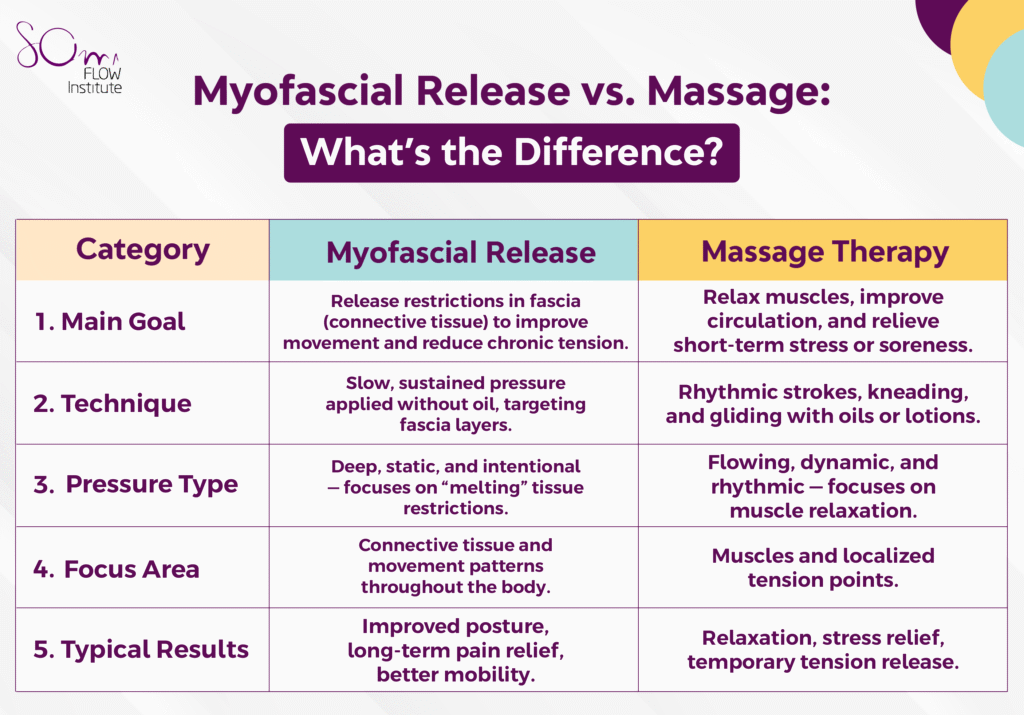
While traditional massage often uses flowing strokes and rhythmic kneading, MFR requires stillness, awareness, and precision.
Here’s why confusing the two can be harmful:
- Massage strokes may “glide over” fascial restrictions
- MFR engages fascia, but also risks deep sensory activation
- Clients may tolerate massage but react negatively to MFR
As a therapist, it’s essential to educate clients on the difference and choose wisely based on body readiness and health status.
The Trigger Point Trap
While many therapists incorporate trigger point release into their sessions, combining it with MFR on sensitive areas (like the scalenes or piriformis) can be risky.
If not approached gradually, you may cause:
- Spasms
- Pain flares
- Emotional trauma recall
Always warm up the surrounding fascia before working directly on a trigger point. And don’t chase the “pain spot”, follow the fascial line.
Detox Symptoms After MFR: How to Guide Your Clients?
Many massage therapists observe detox symptoms in their clients after MFR sessions, especially when working with chronically tense or emotionally burdened individuals. Common signs include:
- Brain fog
- Heavy limbs
- Emotional swings
- Digestive changes
These are normal but not harmless if the client isn’t prepared. Always explain what might happen and recommend:
- Water intake
- Epsom salt baths
- Journaling or rest
If symptoms last longer than 72 hours, refer back to a doctor or reevaluate your pressure and protocol.
Full-Body SomaFlow Course
An immersive introduction to embodied awareness, self-practice, and whole-body integration through the SomaFlow method.
Final Thoughts
Myofascial release is a powerful tool, but also a responsibility. Understanding the limits, risks, and body signals can help you deliver safer, more effective care.
Don’t fall for the myth that “deeper is better.” Instead, work with awareness, patience, and precision.
If you are a massage therapist looking to deepen your understanding of myofascial techniques without risking client safety, join our advanced fascia release training for therapists; learn safe applications, contraindications, and guided protocols from experts.
Protect your clients. Elevate your practice.
People Also Ask
What body parts should massage therapists avoid for myofascial release?
Avoid the front of the neck (carotid area), deep abdominal regions, over varicose veins, healing scars, or any place with nerve bundles like the axilla or groin.
Is myofascial release therapy always safe?
No. Even trained therapists must proceed with caution, especially with elderly clients, those with chronic illnesses, or post-surgical patients. Always assess client readiness.
What are the side effects of myofascial release for clients?
Mild soreness and fatigue are common, but therapists should watch for nerve symptoms, dizziness, or emotional distress, signs you have gone too deep or too fast.
How can massage therapists avoid MFR mistakes?
Train under experienced mentors, learn anatomy in-depth, and develop sensitivity to fascial feedback. Never push through resistance. Let the tissue guide you.
About the Author
Shoshi Hall
Shoshi Hall’s journey into healing began on the stage. As a professional dancer, she experienced both the beauty and the vulnerability of the human body. Years of rigorous training left her with persistent neck and lower back pain, discomfort that touched not only her body but her spirit as well.